Why Recovery Matters for Healthy Ageing and Longevity
We hear a lot about longevity today.
Anti-ageing. Supplements. Biohacking. Ways to optimise how we sleep, eat, move and live.
But there is another question that deserves more attention:
How well are you actually recovering?
You can sleep for eight hours and still wake up tired. You can take a quiet weekend, slow everything down and still not feel fully restored.
This is because rest and recovery are not always the same thing.
Understanding that difference may offer a different way to think about stress, resilience, healthy ageing and longevity.
Rest and recovery are not the same thing
Rest is important, but simply stopping does not always mean that the body has fully recovered.
At Dapeng Clinic, we think about recovery as the body’s ability to:
Regulate → Adapt → Rebuild
after stress.
This is what makes recovery different from simply taking time off.
You may be physically resting, but the bigger question is how well your body is able to respond, restore and adapt after the demands placed on it.
That distinction becomes particularly important when stress is not occasional, but keeps building over time.
What happens when stress keeps building up?
Stress does not always come from one dramatic event.
It can build through everyday experiences such as:
poor sleep
emotional pressure
pain or physical strain
a demanding lifestyle
When these pressures keep accumulating, the body may spend more of its resources simply keeping up, and less on restoration.
This can help explain why taking a day off or getting more sleep does not always leave someone feeling as restored as they expected.
The question is no longer only:
“Am I resting enough?”
It may also be:
“How well am I recovering from what my body has been dealing with?”
What do we mean by Recovery Medicine?
This is where the idea of Recovery Medicine comes in.
At Dapeng Clinic, we use this term to describe a way of thinking that looks beyond the symptom alone.
Instead of only asking:
“What symptoms are we treating?”
we can also ask:
“What may be getting in the way of this person’s ability to recover?”
That shift matters because two people may experience similar symptoms while having very different individual needs, pressures and patterns over time.
Recovery Medicine therefore places greater attention on the person behind the symptom and on their wider ability to regulate, restore and adapt.
It is not simply about doing more.
Sometimes the more useful question is understanding what may be making recovery difficult in the first place.
Resilience does not mean avoiding stress
The idea of recovery also changes how we think about resilience.
Resilience is not about living a life without stress.
Stress is part of life.
Instead, resilience is about how well we can regulate, restore and adapt after stress.
That is an important distinction.
The goal is not to create a life in which nothing difficult ever happens. It is to think about how well the body can respond to demands and then find its way back towards restoration.
In this sense, recovery and resilience are closely connected.
Recovery describes the process of restoring and adapting after stress.
Resilience reflects our ongoing capacity to do that.
What does recovery have to do with longevity?
Longevity is often discussed in terms of lifespan — how long we live.
But perhaps that is only part of the picture.
Another question is:
How well do we continue to recover along the way?
Healthy ageing is not only about adding more years.
It is also about maintaining our capacity to adapt, restore and recover over time.
This gives longevity a slightly different meaning.
Rather than focusing only on extending life, we can also think about how well the body continues to respond to the physical and emotional demands of life as we age.
From this perspective, recovery may be one of the missing pieces in the wider longevity conversation.
A more personalised way to think about recovery
There is no single picture of what recovery should look like for everyone.
Our experiences of stress, sleep, pain, emotional pressure and everyday demands are different.
That is why Dapeng Clinic takes a personalised approach rather than looking at one symptom in isolation. Our wider philosophy focuses on restoration, resilience and understanding the individual as a whole.
For some people, the most useful starting point may not simply be asking:
“How can I do more for my health?”
It may be asking:
“What could be getting in the way of my ability to recover well?”
That question can offer a very different way to think about wellbeing, healthy ageing and longevity.
Recovery is part of the bigger picture
Rest matters.
But rest alone does not always tell us how well the body is recovering.
Recovery asks us to look at something broader: our ability to regulate, adapt and rebuild after the stresses and demands of life.
And perhaps that is an important part of longevity too.
Not only how long we live — but how well we continue to recover along the way.
Personalised Acupuncture in Marylebone, London
At Dapeng Clinic, we offer personalised acupuncture and restorative care in Marylebone, central London.
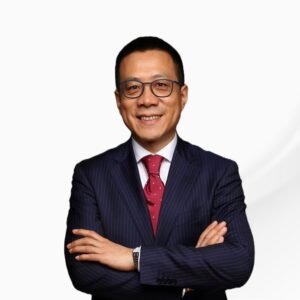
Dr Dapeng Zhang takes time to understand each person as an individual — looking not only at their current concerns, but also at the wider patterns that may be affecting their ability to regulate, adapt and recover.
This personalised approach reflects the thinking behind Recovery Medicine: looking beyond the symptom and considering what may be getting in the way of recovery.