Structural Acupuncture
Kim Kiho
Professional Background
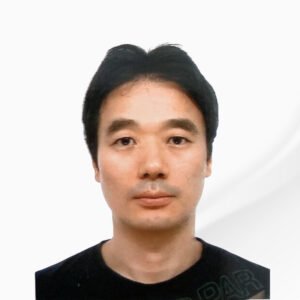
Dr Kim Kiho is a practitioner of Traditional Chinese Medicine with experience in acupuncture, manual therapy and structural bodywork.
He studied Traditional Chinese Medicine at Shanghai University of Traditional Chinese Medicine and Nanjing University of Chinese Medicine.
His work focuses on Lin’s Traumatology and Structural Acupuncture, a specialised approach that looks at how chronic stiffness, tissue adhesion and structural imbalance may affect movement, circulation and the body’s natural ability to recover.
Treatment Approach
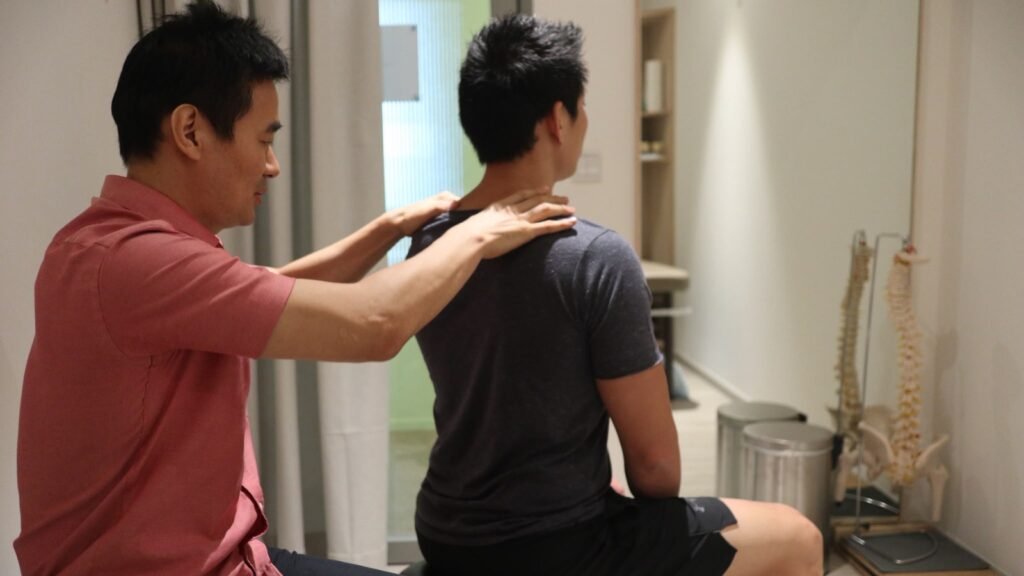
Dr Kim’s approach is rooted in Lin’s Structural Injury Method, guided by the idea that when the body becomes stiff, circulation and communication within the body may become restricted.
He works with the body’s vertical and horizontal axes, carefully assessing how tension travels through the fascia, muscles, joints and surrounding tissues.
Rather than treating only the area of pain, Dr Kim looks at the body as an interconnected structural system. His treatment focuses on gently separating restricted tissue layers, easing long-held tension and supporting more balanced movement throughout the body.
Treatment Methods
Structural Acupuncture
A precise, layer-by-layer acupuncture technique that works with the relationship between skin, fascia and muscle.
This approach focuses on areas where tissue layers may have become restricted or adhered over time, helping to support smoother movement, better structural balance and greater physical ease.
Advanced Lin’s Method Manual Therapy / Tuina
A gentle, non-force manual therapy approach based on Lin’s Structural Injury Method.
It focuses on the body’s vertical and horizontal alignment, helping to ease mechanical stress around the joints, soft tissues and surrounding structures.
Myofascial Tissue Separation Therapy
A specialised soft-tissue approach that works with areas of chronic tightness, fibrous tissue or reduced tissue mobility.
The aim is to help different layers of fascia and muscle move more freely, supporting flexibility, comfort and a lighter sense of movement.
Metabolic & Circulatory Structural Support
A structural approach that considers how chronic stiffness, fascial restriction and postural imbalance may affect circulation, tissue comfort and the body’s natural recovery process.
Treatment is personalised according to each patient’s condition and overall health background, and may be used as part of a wider care plan where appropriate.
Common Concerns
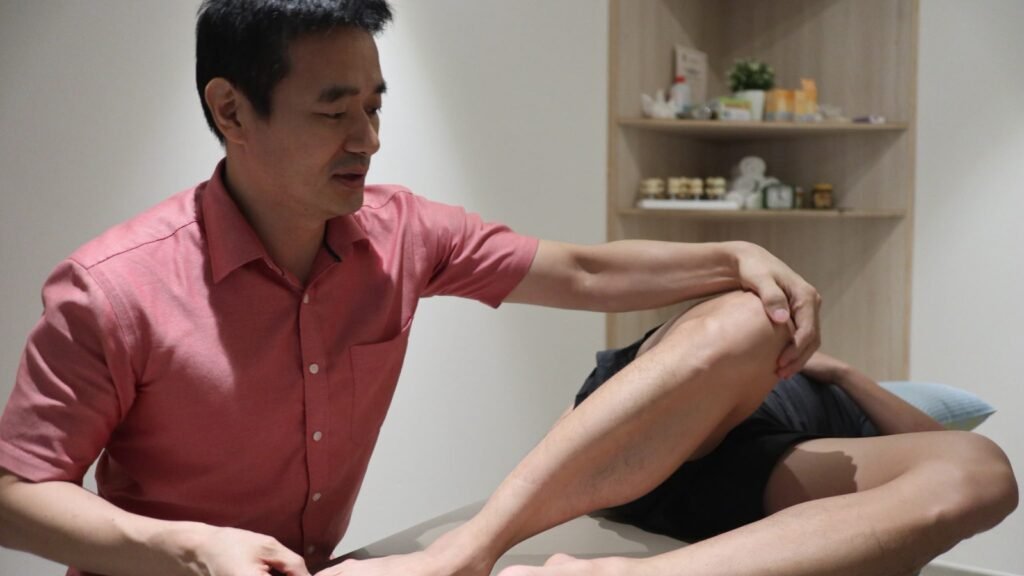
Dr Kim commonly supports patients experiencing complex joint discomfort, chronic stiffness, restricted movement and long-standing postural imbalance.
His approach may be suitable for concerns such as knee discomfort, age-related joint stiffness, runner’s knee-type concerns, neck and back tension, pelvic imbalance, frozen shoulder-type restriction, tennis elbow-type discomfort and chronic torticollis.
He also works with patients experiencing limb heaviness, numbness or restriction where soft-tissue tension, fascia or structural imbalance may be contributing factors.
For patients with more complex health backgrounds, treatment is always adapted carefully and used alongside appropriate medical care where needed.
What to Expect
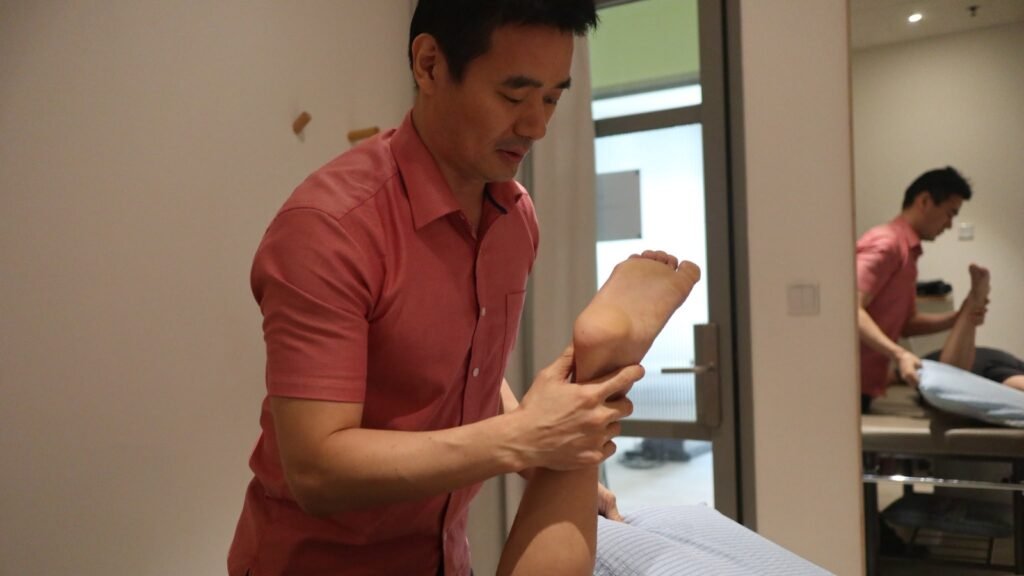
Your first session begins with a detailed structural assessment.
Dr Kim uses Dynamic Palpation to understand how stiffness, tension and compensation patterns move through the body’s vertical and horizontal axes.
Treatment may include structural acupuncture, advanced manual therapy and myofascial tissue separation techniques. His work is precise, gentle and carefully adapted to the patient’s body and comfort level.
Some patients notice a release of deep pressure, improved range of motion, a lighter feeling in the body or easier movement after treatment, although each person responds differently.
Book a Consultation
Take the first step toward easier movement and better structural balance with Dr Kim.