

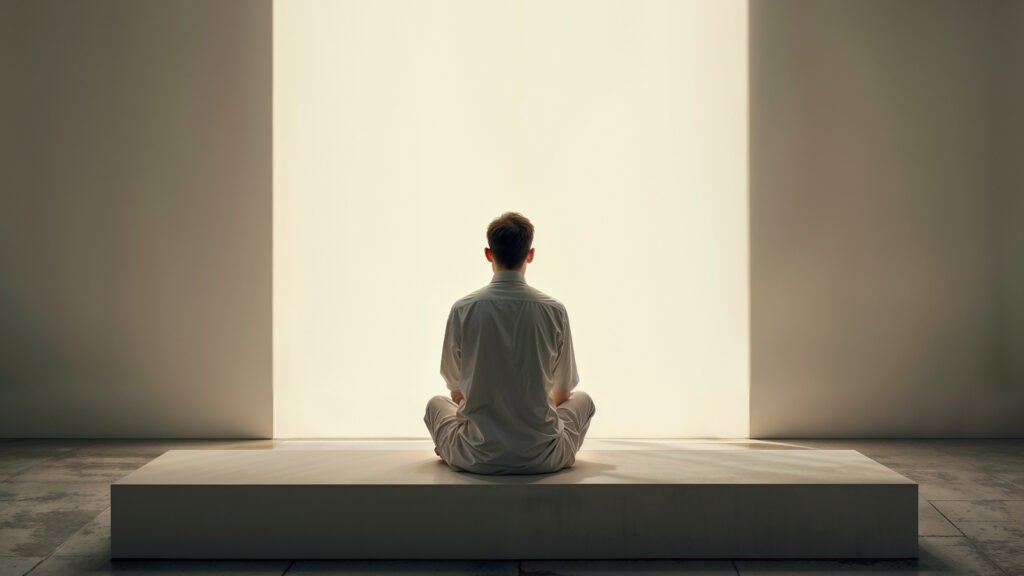
You sleep for eight hours.
You take the weekend off.
You spend an evening on the sofa, scrolling through your phone or watching Netflix.
Yet you still feel tired. Your body may have stopped moving, but you do not feel restored. This is something I see frequently in clinical practice.
Many people assume that rest and recovery are the same thing. But stopping an activity does not always mean that the body has entered a truly restorative state.
You may be physically still while your mind continues preparing for the next problem.
True rest is not simply the absence of activity. It begins when the body no longer feels that it has to protect itself. When the brain stops scanning for danger.
When the nervous system can finally say:
“I am safe enough to let go.”
Only then can meaningful recovery begin.

Rest usually means reducing activity.
You stop working, sit down, go to bed or take time away from your usual responsibilities.
Recovery is different. Recovery is the process through which the body begins to restore its physical, mental and emotional resources.
It is therefore possible to be resting without truly recovering.
You may be:
From the outside, you appear to be resting.
Internally, however, your body may still be preparing for the next demand.
The body has stopped. The nervous system has not.
This is why simply spending more time in bed does not always resolve persistent tiredness. The quality of rest matters as much as the amount of time spent resting.

Patients often describe this experience in remarkably similar ways:
“I slept all weekend, but I am still exhausted.”
“I have been on holiday, but I do not feel refreshed.”
“I am always tired, but I cannot properly relax.”
“I fall asleep, but I do not wake up feeling restored.”
When the body remains under prolonged pressure, people may also experience:
Stress can affect both the mind and the body. These symptoms often interact, which is why I look at sleep, energy, digestion and physical tension as part of a wider pattern.

I do not believe that stress is only psychological.
Stress becomes biological.
The body is remarkably intelligent.
When it believes that life is unsafe, uncertain or overwhelming, it may prioritise immediate protection over restoration.
Muscles remain tense.
Breathing becomes shallow.
Sleep loses its restorative quality.
Digestion may feel unsettled.
The body continues behaving as though it needs to be ready for the next problem—even when the immediate pressure has passed.
In everyday language, people sometimes describe this as living in “survival mode”.
Survival mode is not a formal medical diagnosis. It is a way of describing the experience of feeling unable to switch off, settle or recover after prolonged pressure.
This is also why some patients tell me:
“All my tests are normal, but I still do not feel well.”
Normal medical results can be reassuring, but they do not make your experience imaginary or unimportant. Poor sleep, muscular tension, digestive discomfort and persistent fatigue may still need to be understood as part of a wider pattern.
At Dapeng Clinic, I consider how your symptoms, sleep, energy, lifestyle and response to stress may be interacting.

Sleep and recovery are closely connected, but they are not identical.
You may spend enough hours in bed while still carrying physical tension. You may wake repeatedly during the night, or find that your mind remains active before sleep and begins racing again as soon as you wake.
This can create a frustrating cycle:
That worry creates another layer of pressure, making it even harder to relax.
The answer is not always simply to force yourself to sleep for longer. Sometimes, recovery also requires creating conditions in which the body feels supported and safe enough to release its tension.

Trying harder to relax can easily become another task.
Healing cannot be forced.
Recovery often begins with small signals that tell the body it no longer needs to remain on constant alert.
That may mean creating a clearer transition between work and rest, reducing constant stimulation or taking a few moments to breathe more slowly and comfortably.
But it may also mean being listened to.
Feeling seen.
Having space to pause.
Recognising that the body is not failing—it may simply have been protecting you for too long.

At Dapeng Clinic, treatment is never only about inserting needles.
It begins with listening.
I want to understand not only where you feel discomfort, but also:
Acupuncture is not a cure-all, nor should it replace appropriate medical care.
In my practice at Dapeng Clinic, acupuncture may form part of a broader, personalised approach that considers your symptoms, lifestyle and wider experience of health.
Many patients also value what surrounds the treatment:
A quiet space.
Time to slow down.
The experience of being listened to.
A pause from constant demands.
An opportunity to reconnect with what the body is communicating.
My aim is not to force the body into recovery.
It is to create supportive conditions in which the body has an opportunity to settle, regulate and restore.
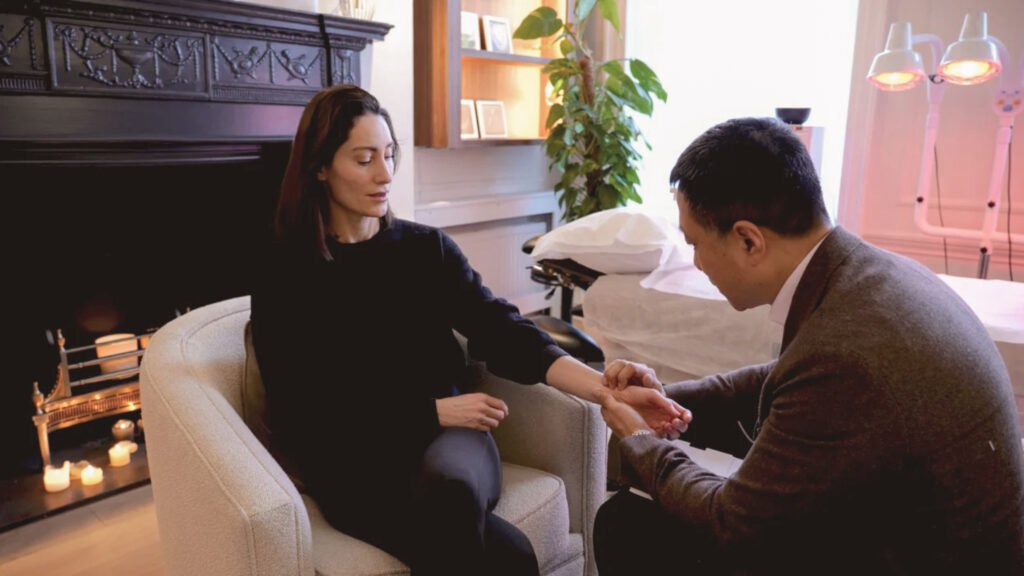
If you recognise yourself in this article—feeling tired despite sleeping, struggling to switch off or regularly waking unrefreshed—you do not have to wait until exhaustion forces you to stop.
An initial consultation gives me time to understand your sleep, energy, stress patterns, lifestyle and wider health history before discussing whether acupuncture may be appropriate for you.
Book a personalised acupuncture consultation with me at Dapeng Clinic in Marylebone, London.
See more about Dr Zhang